
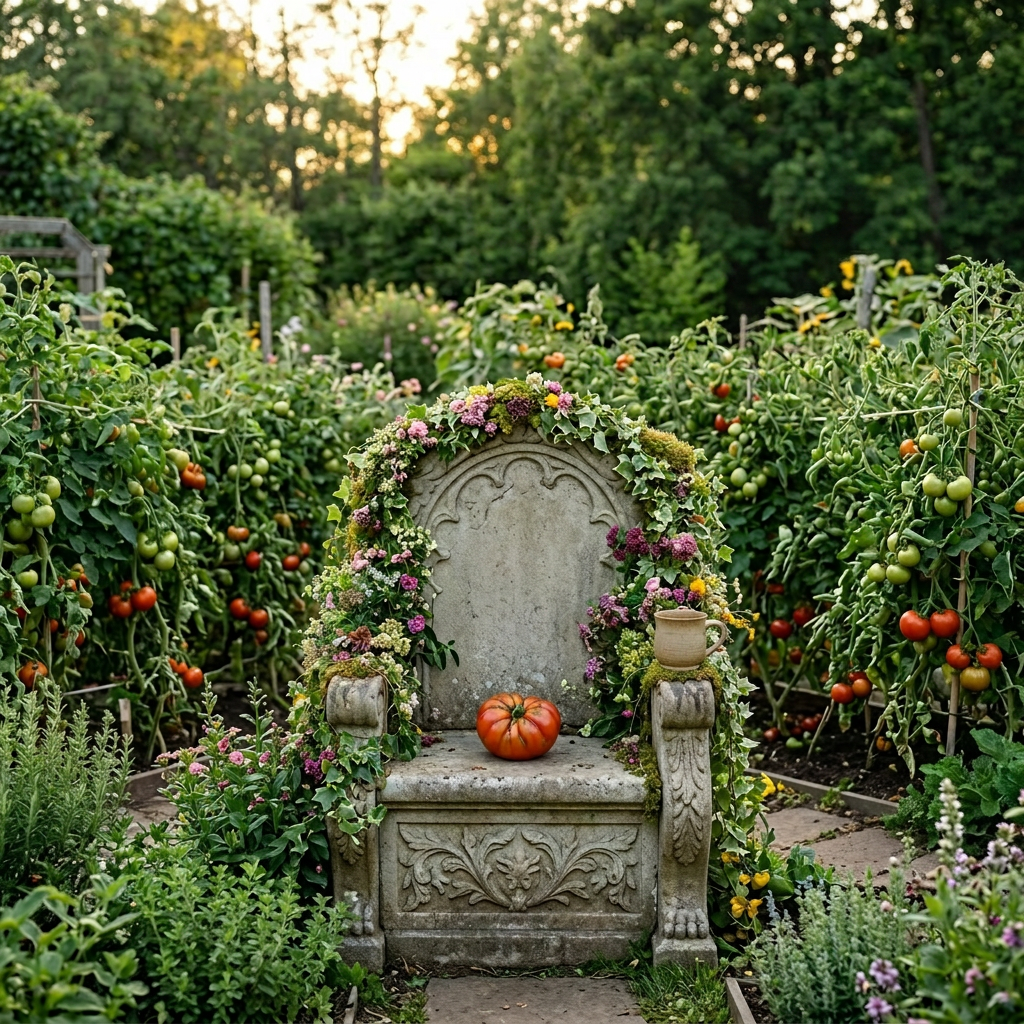
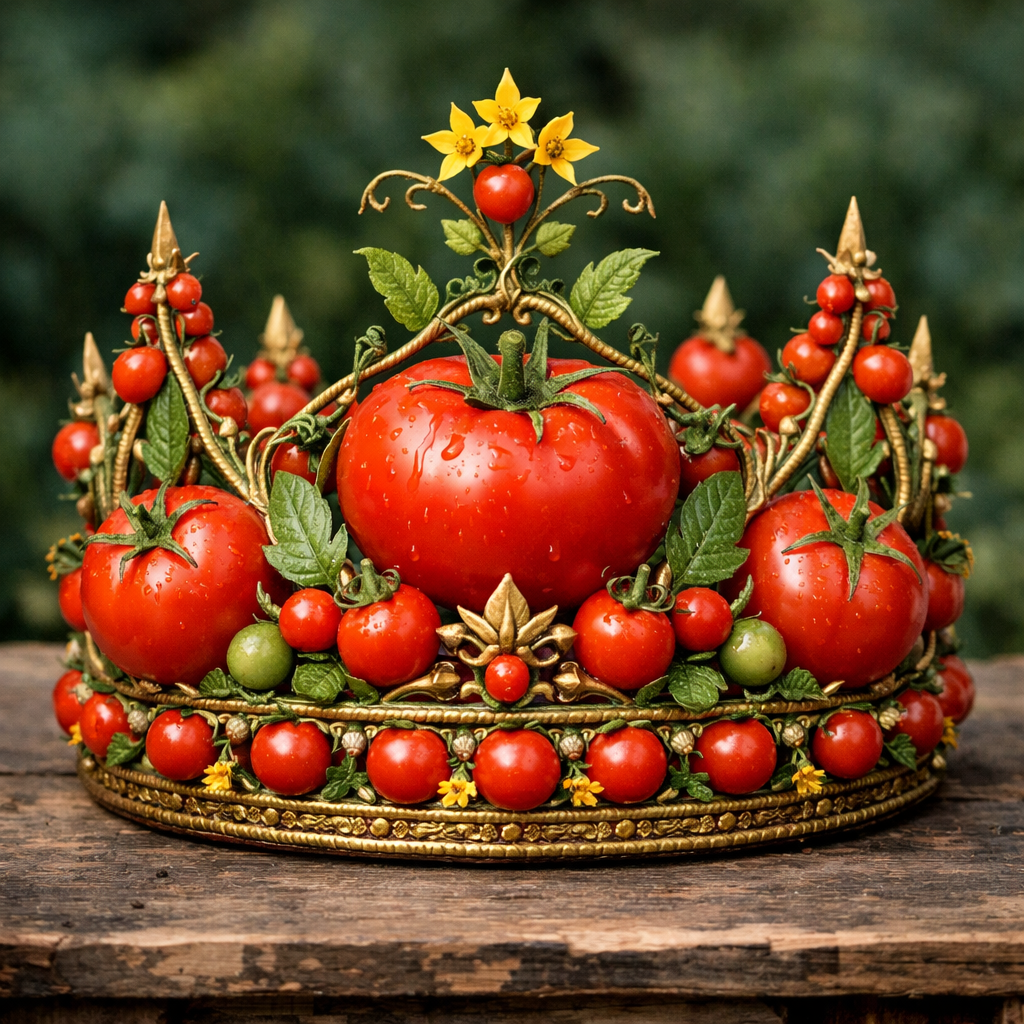
The harvest glows like a crown of red suns. My hands are stained with triumph and rot, both sacred. Some fruits split under their own abundance, others ripen perfectly, jewels of labor and luck. I taste the season’s truth: victory is never pure. The hybrids gave me plenty; the heirlooms gave me soul. Perfection is a myth, and resilience is the real yield.
That’s the poetic version. The real version? I’m standing in the garden, covered in fruit guts, holding a tomato that looks like it survived a bar fight. The hornworms are gone, the blight has retreated, and I’m declaring victory like a monarch of chaos. My crown is made of sweat, caffeine, and questionable decisions.
The garden looks like a battlefield where the plants won and I just get to clean up. I’m sticky, sunburned, and slightly delirious. I raise my coffee mug like a scepter and proclaim, “Long live the Rage Garden!” The basil bows. The cucumbers plot rebellion.
The Abundance from Rage
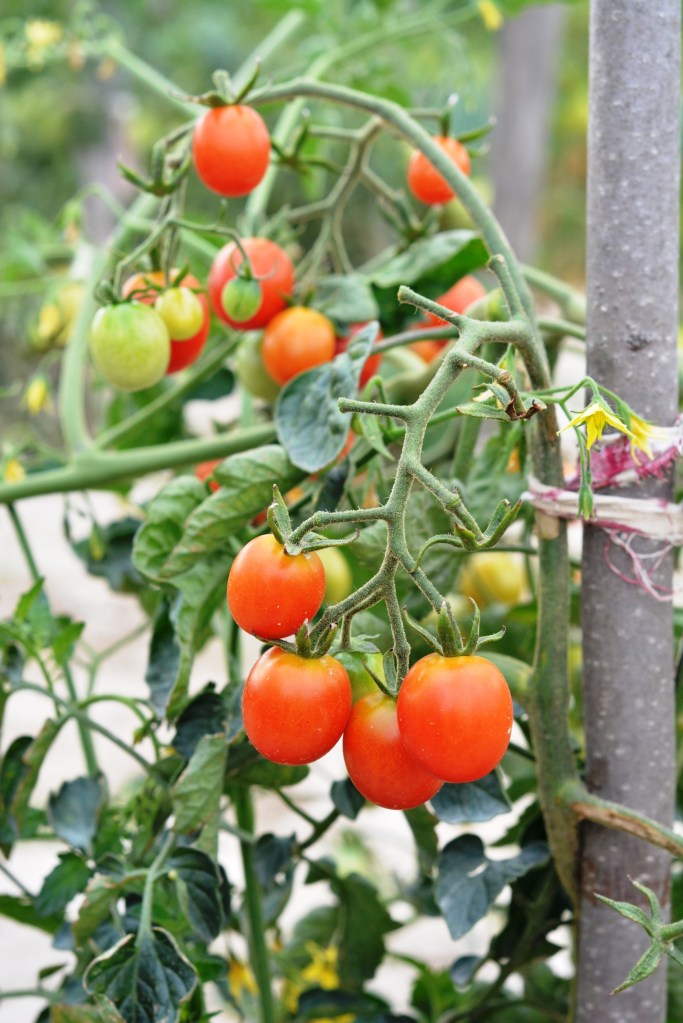
I walk through the rows and see the aftermath of glory. The vines sag under the weight of their own success. Some fruits burst open, their sweetness spilling onto the soil like a sacrifice. Others cling to the stem, proud and unbroken. I gather them all, the perfect and the ruined alike, because in this garden, we celebrate overachievement and emotional damage equally.
Abundance, I’ve learned, is exhausting. It’s the garden’s way of saying, “You wanted success? Here, deal with this mess.” I haul baskets of tomatoes like trophies and casualties, muttering, “Next year, I’m planting fewer.” I say that every year. I never mean it.
The vines droop dramatically, like exhausted actors after a long performance. I whisper, “You did great,” and they respond by dropping another tomato on the ground. The soil hums, smug and silent, as if it knew this would happen.
The Ritual of Harvest
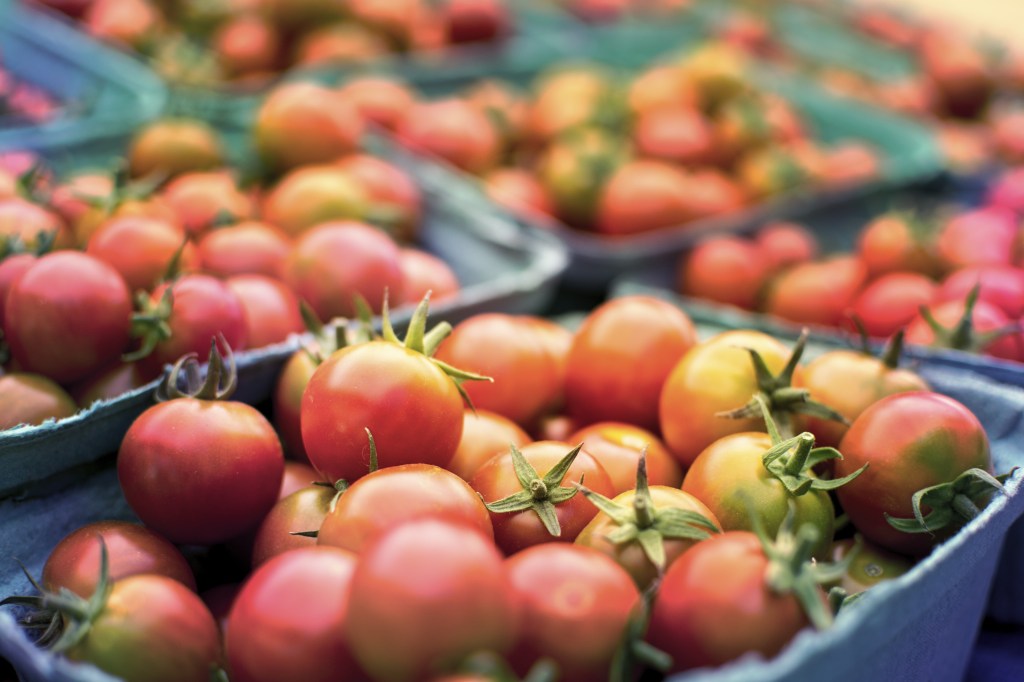
The act of gathering becomes ceremony. I move slowly, honoring each plant that endured the siege. The air is thick with the scent of earth and fruit, and mild regret. I sort the harvest by hand, separating the wounded from the whole. The flawed ones I keep close, reminders that beauty is born from endurance. The perfect ones I offer to the sun, symbols of what was earned through rage and care.
It’s less a ritual and more a therapy session. I whisper apologies to the plants I neglected, promises to water more consistently, and threats to the cucumbers that tried to strangle the peppers. The soil listens, as always, with quiet judgment.
I find one tomato shaped like a heart and declare it a sign. Then I find another shaped like a butt and declare it a metaphor. The garden is generous with symbolism.
The Feast and the Reflection
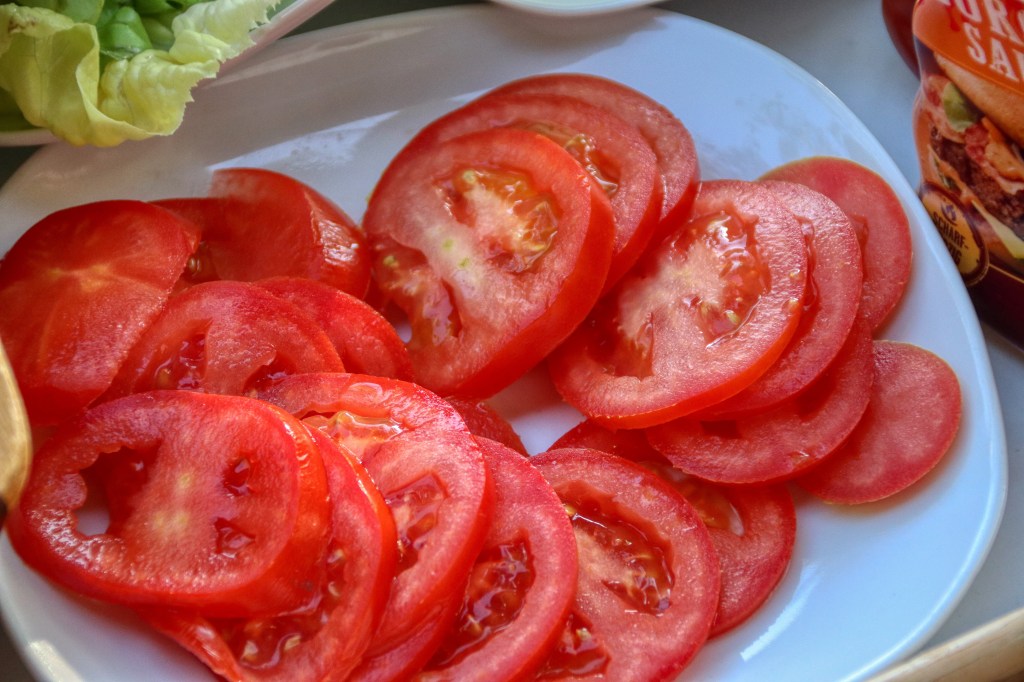
I taste the first tomato and feel the weight of the season in its flesh. It’s sweet and sharp, alive with memory, and possibly a hint of revenge. I think of the hornworms, the blight, the long nights of vigilance. Every flavor carries the echo of battle.
Victory, I’ve learned, is not the absence of loss but the transformation of it. It’s eating the spoils of war while pretending you didn’t cry over calcium deficiency three weeks ago. It’s realizing that resilience tastes suspiciously like exhaustion and pride mixed together.
I eat another tomato straight off the vine, juice running down my arm like victory blood. The basil cheers. The peppers gossip. The cucumbers pretend they’re above it all.
And let’s be honest, the best tomato you’ll ever taste is the one you eat standing in the garden, sunburned, sweaty, and slightly feral. It’s not washed, not sliced, not Instagram‑ready. It’s chaos in fruit form. Grocery‑store tomatoes can’t compete; they taste like regret and refrigeration. This one tastes like triumph, caffeine, and questionable life choices.
I lick the juice and the dirt from my wrist and declare, “This is the flavor of survival.” The soil hums approvingly, the bees buzz like a royal fanfare, and I realize that the Rage Garden doesn’t just feed me, it mocks me lovingly while doing it.
The Coronation of Resilience
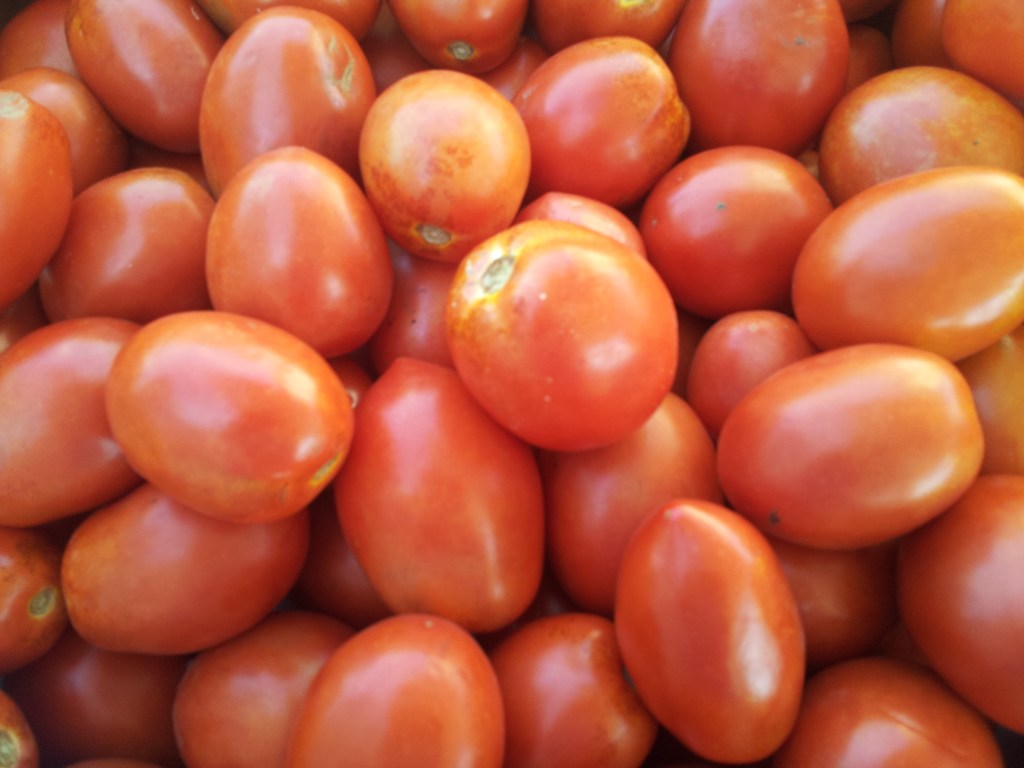
The garden stands crowned in light. The vines shimmer with scars and strength, their leaves fluttering like battle flags. I kneel in gratitude, knowing that the true coronation is not mine but the soil’s. It has endured drought, blight, hornworms, and my questionable watering habits — and somehow, it still forgives me.
I raise my coffee mug like a royal chalice. “To resilience!” I shout, startling a bee mid‑flight. The basil bows. The peppers gossip. The cucumbers continue their silent coup in the corner. The tomatoes, regal and smug, bask in the sun like they own the place. They probably do.
I am the garden queen — crowned not by perfection but by persistence. My throne is a broken kneeling pad, my scepter a mud‑streaked trowel, and my royal robes are sweat‑stained overalls that smell faintly of compost and triumph. I have survived calcium deficiency, fungal drama, and emotional instability disguised as crop management. I have earned this crown of suns.
The soil hums beneath me, patient and amused. It knows I’ll be back tomorrow, muttering about weeds and watering schedules, pretending I’m in control. But for now, I reign. I am sovereign of chaos, ruler of rot, and high priestess of persistence.
I take a final sip of coffee, lukewarm, gritty, and possibly a bug in it, and declare, “Long live the Rage Garden!” The bees buzz their approval. The wind carries my decree through the rows. The garden doesn’t rest in peace; it reigns in power, sarcasm, and a thin layer of dirt.
The harvest is both triumph and confession. I learned that rage, when tempered by care, becomes creation. The garden does not rest in peace. It reigns in power and occasionally mold.
Discover more from Anything Agriculture
Subscribe to get the latest posts sent to your email.
