
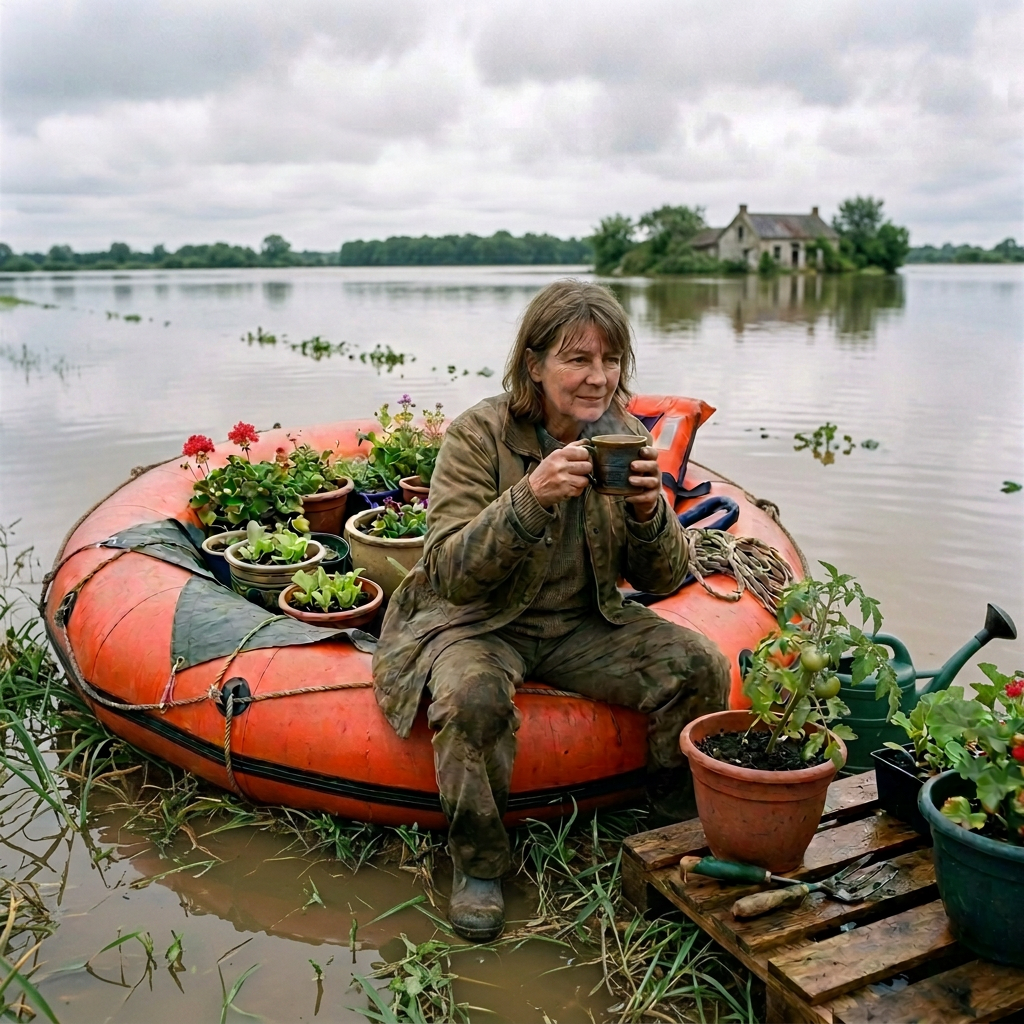

It’s been raining since the dawn of time and I’m standing in my backyard, clutching a mug of coffee like it’s a flotation device. The clouds hang low and smug, as if they know exactly how many hours I spent weeding before they decided to reenact The Great Flood: Midwest Edition.
Record rainfall has turned my raised beds into rice paddies. The mulch is floating away like tiny rafts of regret, and the basil looks like it’s auditioning for a tragic opera. I didn’t plant water lilies, but apparently the universe did.
I want to be clear, I’m not making fun of anyone who’s lived through real tragedy. My heart goes out to those who’ve been truly affected by flooding and loss. But sometimes, in the garden, laughter is the only thing that keeps us from dissolving into the mud ourselves.
So here I stand, over‑caffeinated and under‑prepared, glaring at the sky like it owes me rent. The Rage Garden doesn’t fear the storm it just rolls its eyes, refills its coffee, and mutters, “Fine. Let’s see what you’ve got.”
Heat, Humidity, and the Steamy Apocalypse
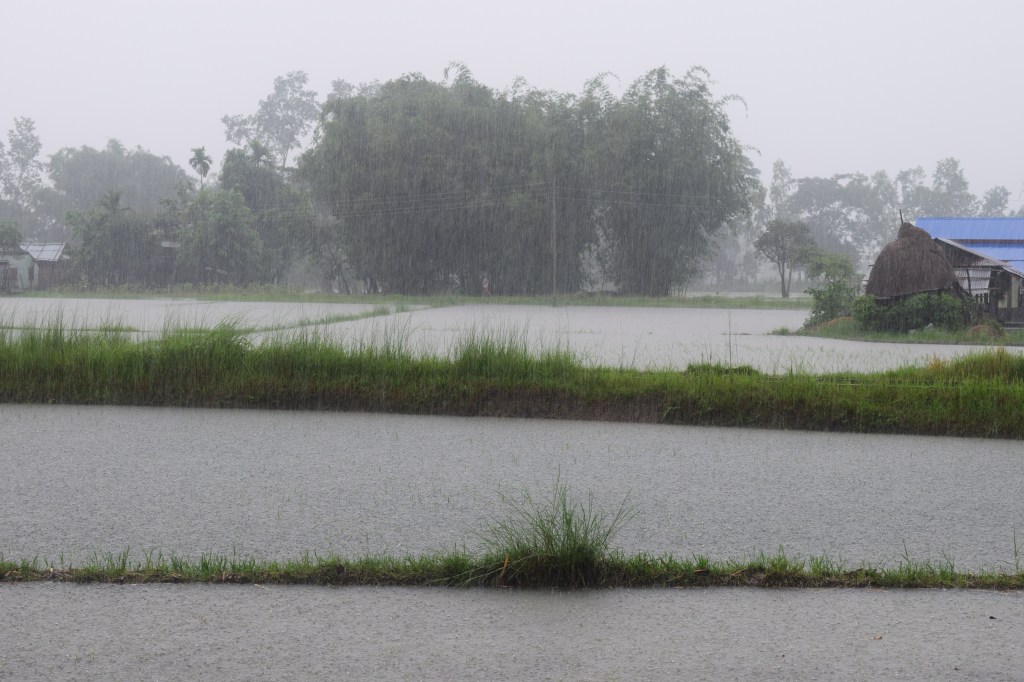
Before the rains, Indiana was doing what it always does in August, simmering like a forgotten pot of corn chowder. The air was thick with corn sweat, that special Midwestern humidity that makes you wonder if gills would be more efficient than lungs. You don’t breathe it; you chew it.
Then the rains came, and didn’t stop. The sky couldn’t decide if it was angry or apologetic, so it just kept dumping water until the garden looked like a failed science experiment.
Now the humidity has teamed up with the heat to create a post‑rain sauna. My hair has achieved new levels of frizz, my glasses fog every time I step outside, and the plants look like they’re gasping for air. The tomatoes? Still green and now cracked. Smug. Mocking me from the vine like tiny, chlorophyll‑filled villains.
The sun and rain are locked in eternal combat, and my peppers are collateral damage. The pumpkins are rotting off the vine, soft, sad casualties of too much love from the sky.
So what does this mean for the garden?
- Flooded soil loses oxygen, and roots suffocate.
- Nutrients wash away faster than my patience.
- Fungal spores throw a party no one wanted.
What’s okay? Some hardy souls, okra, maybe the zinnias, will bounce back once the ground dries. But the tomatoes? They’ve split from the sudden water surge, and without that usual August heat, they may never ripen properly.
It’s the kind of weather that tests your faith in drainage, caffeine, and the power of sarcasm. But this is the Midwest we don’t quit. We just wring out our socks, refill the coffee, and keep gardening like it’s a competitive sport.
The Science of Suffering (and Survival)
If your garden is underwater, and I mean actively flowing water from other places — it might be time to accept the hard truth: your garden could be a total loss. It’s safer (and saner) to support your local farmers’ market for a while. Better safe than sorry no one wants to eat lettuce that’s been through a flood and could have who know what on it.
Usually, this time of year, we’re begging the sky for rain. We’re out there mulching, praying, and performing complicated rain rituals so we don’t have to water again that day. But this year? Mother Nature threw her own Rage Garden hissy fit and dumped enough water to make the Great Flood look like a light drizzle.
If your garden is just very, very wet not underwater, just soggy enough to make you question your life choices, there’s hope. Believe it or not, all that mulching you did actually helped your garden weather the storm. Mulch doesn’t just hold moisture; it keeps the soil in place and reduces the amount of dirt splashing onto your plants, which means fewer diseases. Also mulch slowes down the water so that it can get ablsorb in soil. When water comes down so fast there is little time for it to get absorbed. Mulch helps slow it down and put the water where you want it , in the soil not the ditch.
Still, the science of suffering is real:
- When a garden floods, the soil doesn’t just get wet, it gets smothered. All those tiny air pockets that roots depend on for oxygen fill with water, and suddenly your plants are trying to breathe through mud. That’s soil compaction and root suffocation, the silent killer of summer vegetables. Roots can’t pull in nutrients or oxygen, and the plants start to wilt even though they’re surrounded by water. It’s like drowning while standing up.
Then comes the fungal outbreak, the uninvited after‑party of every flood. Powdery mildew, blight, and mold spores thrive in the damp, sticky air. They spread faster than gossip at the farmers’ market, coating leaves in fuzzy white despair. The humidity is their playground, and every splash of mud is an open invitation.
And finally, nutrient washout — the great exodus of nitrogen, potassium, and all the good stuff your plants actually need to survive. The rain doesn’t just soak the soil; it flushes it clean like a guilty conscience trying to start over. Nitrogen disappears faster than my patience when the hose kinks, and what’s left behind is tired, depleted soil that needs a serious recharge before it can nurture anything again.
To recharge your soil, add compost and organic matter. All that rich, broken‑down goodness helps rebuild structure, restore nutrients, and coax your soil back to life after the flood’s emotional damage. It won’t fix everything overnight, but it will help your garden bounce back with the stubborn resilience that defines every Midwest gardener who refuses to quit, even when the sky tries to wash the whole season away.
So yes, the science of suffering is real. But in the Rage Garden, we turn misery into momentum. get some coffee , compost everything that betrayed you, and remember, rage is just energy waiting to be recycled into growth.
So what can you do now?
First, take a deep breath, preferably not too close to the compost pile. This is the moment for triage, not denial. Dead is dead. There’s no reason to hang on to something that’s gone or dying. They’re not coming back, and there isn’t enough time left in the season for those plants to recover and produce. Cutting your losses is not defeat, it’s the healthiest way to deal with a damaged garden.
Start by composting everything that betrayed you: the split tomatoes, the rotted pumpkins, the drowned cucumbers. They’ve served their purpose and can now be reborn as next year’s soil therapy. Then, trim the damaged leaves and give the survivors space to breathe. Think of it as emotional decluttering for plants they need room to recover from the drama.
And keep your eyes peeled for fungus. With humidity this high, it’s basically the Midwest’s version of a spa day for mildew. Every damp leaf is an invitation, every splash of mud a welcome mat.
In the Rage Garden, recovery isn’t graceful, it’s stubborn. You curse, you laugh, you keep going. Because even when the garden looks like it’s auditioning for a disaster movie, you know the truth: rage, humor, and compost are the holy trinity of survival.
The Emotional Weather Report
By late summer, the gardener’s emotional forecast reads like a five‑day caffeine binge: scattered despair with a strong chance of stubborn hope. I’ve accepted that my tomatoes are now decorative, green, smug, and unlikely to ripen. Maybe I’ll paint them red and call it art. The garden doesn’t care about my feelings, but it does respond to drainage, which feels like a metaphor for life in the Midwest.
Still, there’s humor in the chaos. The mud, the mildew, the endless humidity, they’re all part of the mythic persistence that defines us. So here’s to survival: to soggy socks, to composted rage, to gardeners who refuse to quit even when their pumpkins rot off the vine.
If your garden is a total loss, remember, there’s always next year. Resilience sometimes looks like failure, but it’s really just transformation in disguise. It’s about looking around and realizing things don’t have to be perfect to be good.
Because the rain doesn’t ruin the garden, it rewrites it. It washes away perfection and leaves behind persistence. So raise your coffee mug to the storm, and let the flood remind you: even in the mud, something new is always ready to grow.
And if you’ve got your own soggy garden confessions, share them. Misery loves company but gardeners? We turn it into compost.
Discover more from Anything Agriculture
Subscribe to get the latest posts sent to your email.
