
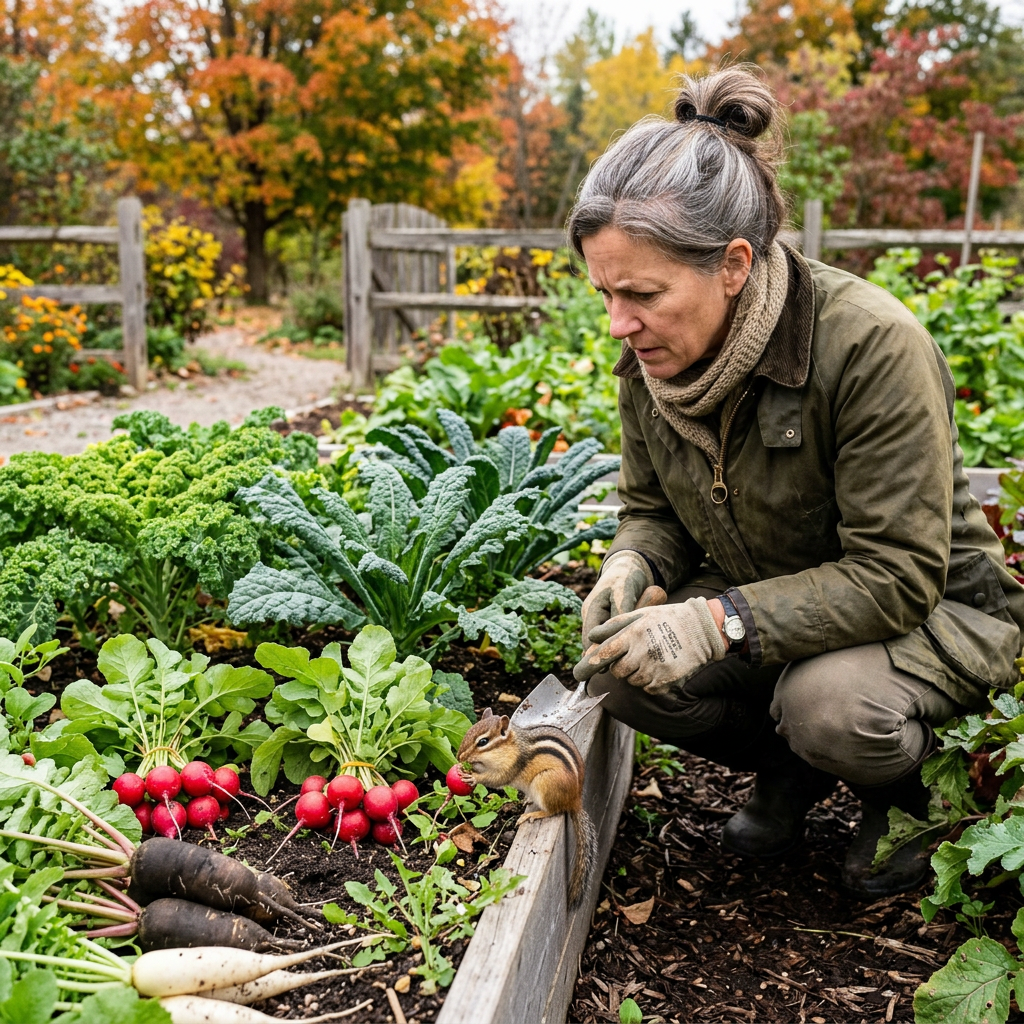
By the time the lettuce and spinach have settled into their beds, the garden feels like it’s holding its breath. The air sharpens. The soil cools. Even you can feel the shift when you step outside, that quiet invitation that autumn gives only to gardeners who are paying attention. Rocko notices it too. He climbs onto the fence, bright‑eyed and alert, his tail flicking like he’s about to announce something important. This is when the radishes arrive.
If you’ve ever planted radishes, you know they don’t enter a garden politely. They fling themselves into the soil like they’re late for their own tale. They mature so quickly that you can almost watch them grow. In old German folklore, radishes were believed to cut through misfortune. People hung them in doorways or carried them in pockets, trusting their sharp bite to ward off illness and bad luck. They were protective, almost talismanic, a root that stood between the household and whatever darkness lingered outside.
And they come in so many forms that planting them feels like choosing characters for a story. The small red ones rise fast and bright, crisp and peppery, snapping between your teeth like sparks. Daikon stretches deep into the soil, slow and steady, cleaning the earth as it grows. Black radishes carry an old‑world bitterness, a medicinal strength that feels ancient. Watermelon radishes hide their color until you slice them open, revealing a pink heart that looks like a secret. Every type carries its own magic. Every type grows with urgency, as if radishes understand that autumn is a season for quick transformations.
When you press radish seeds into the soil, it feels like planting tiny sparks. They settle with eager certainty, and you know they’ll rise almost immediately. Radishes don’t ask for much. Cool soil. Short days. A gardener willing to be delighted. Some magic takes months. Radishes remind you that some magic happens right away.
Rocko, the garden chipmunk menace, saboteur, and self‑appointed foreman, watches you with exaggerated seriousness. He sits bolt upright, whiskers vibrating like tuning forks, studying your radish planting technique as if he’s about to file a performance review. Radishes, in his opinion, require ceremony. And supervision. Mostly supervision.
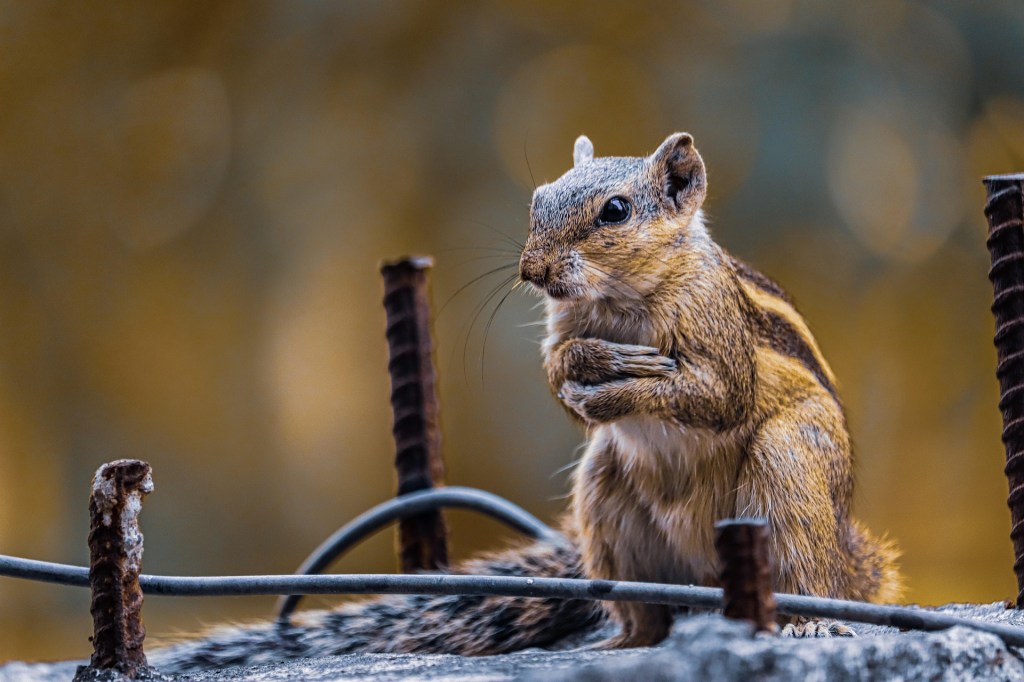
When you press the last seed into the soil, he looks satisfied, the way a familiar might when a witch finally adds something sharp and protective to her autumn beds. Then he immediately ruins the moment and sprints across the garden and the yard like he’s smuggling state secrets. You watch as your unofficial garden familiar is being completely unhinged.
What most people never learn is that radishes change completely when roasted. If you’ve only eaten them raw, you don’t yet know their second personality. The heat softens their bite and turns their sharpness into something mellow and sweet. Roasting them feels like a small alchemy. You toss them with olive oil and salt, slide them into a hot oven, and wait for the moment when their edges begin to caramelize. The transformation is quiet but profound. The radish that once snapped with pepper becomes tender, almost buttery, a root that tastes like it has let go of its defenses. Eating them warm from the pan feels like tasting a softened version of courage.
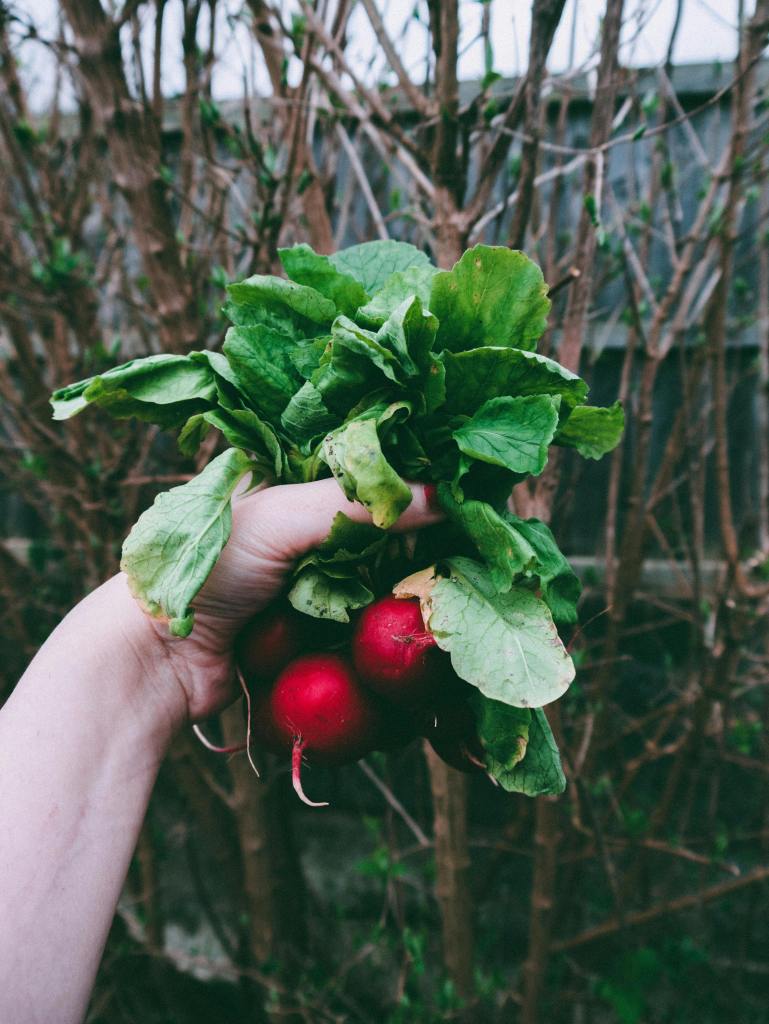
Rocko steals one off the out the garden, of course. He drags it under the table, tastes it, and freezes, stunned, betrayed, and deeply confused that a radish can be soft. He stares at you like you’ve performed forbidden magic. You assure him it’s just roasting. He does not believe you.
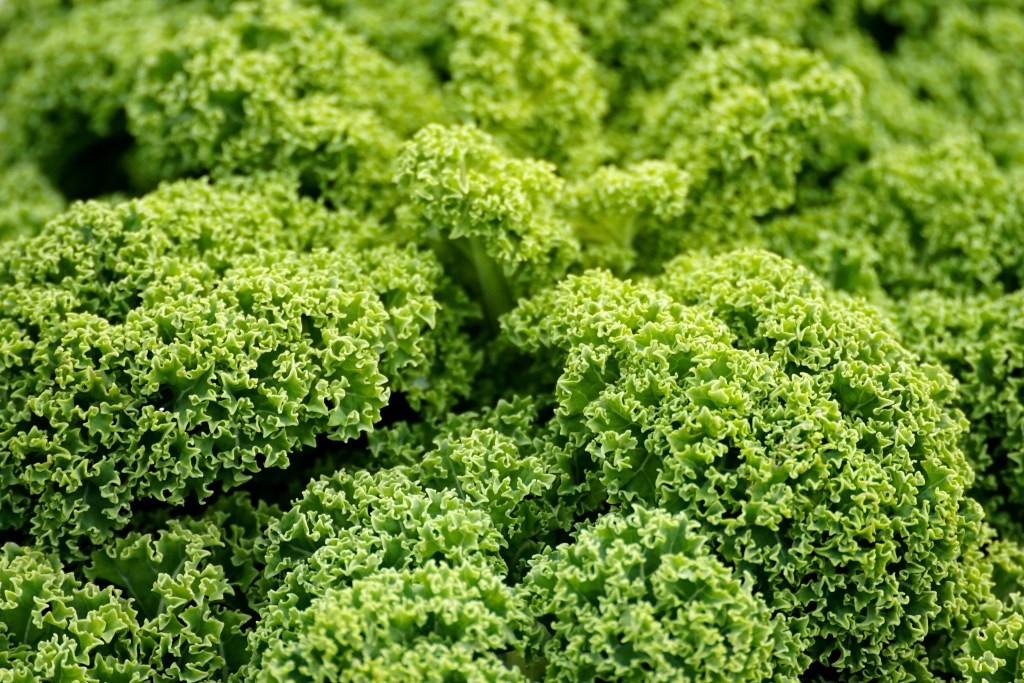
Kale enters the story differently. Where radishes sprint, kale endures. If radishes are sparks, kale is the ember that refuses to go out. In Scottish tradition, kale was used in Halloween divination rituals. Young people would pull a kale stalk from the field to predict the personality of their future spouse. A crooked stalk meant a difficult partner. A tall, straight one meant a good match. Kale has always been a plant of truth telling. It reveals things. It withstands things. It becomes sweeter after frost, as if the cold teaches it courage.
Planting kale feels like planting a promise. The seeds are tiny and dark, and you tuck them into the soil with the same care you give to spinach. Kale prefers the cool, the steady, the slow rise. It does not rush. It does not panic. It simply grows stronger as the nights lengthen. You water it gently, knowing it will outlive almost everything else in the garden. Kale is the plant that stays. It is the plant that refuses to collapse. It is the plant that reminds you that resilience is not loud. It is quiet, frost‑forged, and deeply rooted.
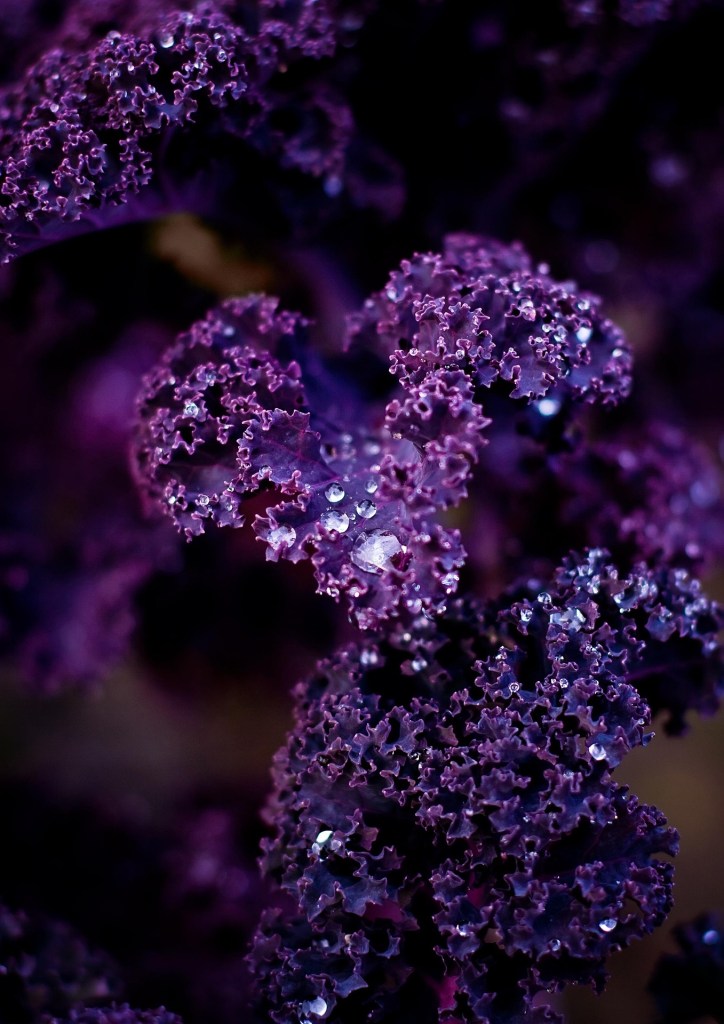
Rocko shifts again when you plant kale. He lowers himself into a crouch, the way small creatures do when they recognize something ancient. Then he ruins the solemnity by dragging a kale seedling out of the ground the moment you’re not looking. He believes he was raised by garden spirits. You’re stuck now—Rocko is your unofficial garden mascot whether you wanted him or not. Maybe he was sent to help you by a trickster god who enjoys watching what you’ll do in the middle of all this chaos, or maybe he’s just a chipmunk who wants to help because you’re a crappy chipmunk. Whatever he is, he is very confident.
Together, Rocko and you watch radishes and kale deepen the autumn spell. Radishes bring protection. Kale brings endurance. Lettuce brings softness. Spinach brings strength. And Rocko, perched on his fence like a familiar who has seen many seasons and caused many problems, watches the transformation unfold.
Discover more from Anything Agriculture
Subscribe to get the latest posts sent to your email.
