
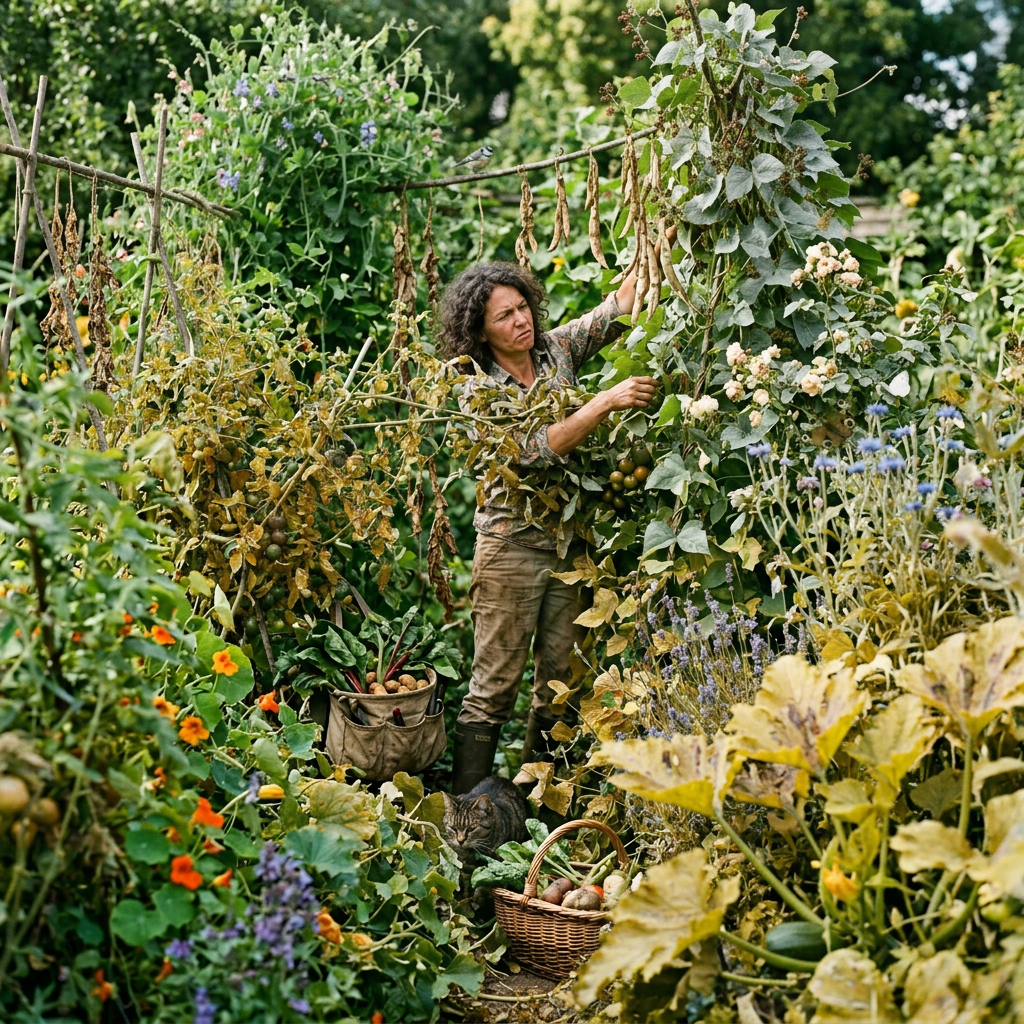
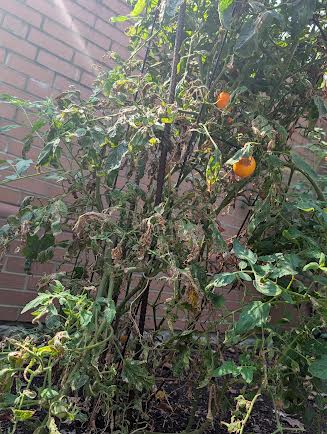
There comes a moment in every gardener’s life when the Rage Garden slips out of their hands. One week you are tending every leaf, watering every bed, whispering encouragement to your tomatoes. Then the heat rolls in like a hammer. Or you take a vacation and come home to a jungle. Or life simply demands too much, and the garden grows wild while you are busy surviving. Chaos arrives quietly at first, then all at once. You step into your green kingdom and realize it has crowned itself without you.
It happens to everyone. The Rage Garden is a living creature, and when you step away, it does what living things do. It grows. It sprawls. It rebels. It becomes a kingdom without a ruler, vines claiming territory, weeds rising like opportunistic invaders, pests celebrating their sudden freedom. You walk back into the garden and feel that sinking moment of recognition. It got away from you, and it did so with enthusiasm. Now the garden looks like some overgrown vacation lot, wild and unbothered, as if it spent the summer throwing a party in your absence. The beds you once tended with intention now resemble a forgotten roadside field, bursting with plants that decided they no longer needed your permission to take over. .
The first truth is simple. You are not a failure. You are a human being with a life, responsibilities, exhaustion, and limits. Gardens do not punish you for stepping away. They simply respond to the world as it is. Heat waves scorch. Storms flatten. Vacations interrupt. Chaos happens. The Rage Garden understands this better than any tidy, traditional plot ever could. It is not a place built for perfectionism. Perfectionism leads down a sad road where nothing is ever good enough and every flaw feels like failure. The Rage Garden rejects that entirely. It is a place for resilience, for learning, for showing up imperfectly and still growing something real.
When you return to a garden that has gone feral, the shock can be overwhelming. Vines may have swallowed trellises. Weeds may have risen taller than your seedlings. Pests may have thrown a victory parade in your absence. Beds that once looked intentional now resemble a wild forest. The instinct is to panic, to feel ashamed, to believe you have ruined the season. But the Rage Garden asks you to pause. Walk the garden without judgment. Look at what is alive, what is struggling, and what is gone. Chaos is not a verdict. It is simply the current chapter.
When the Garden Has Gone Too Far
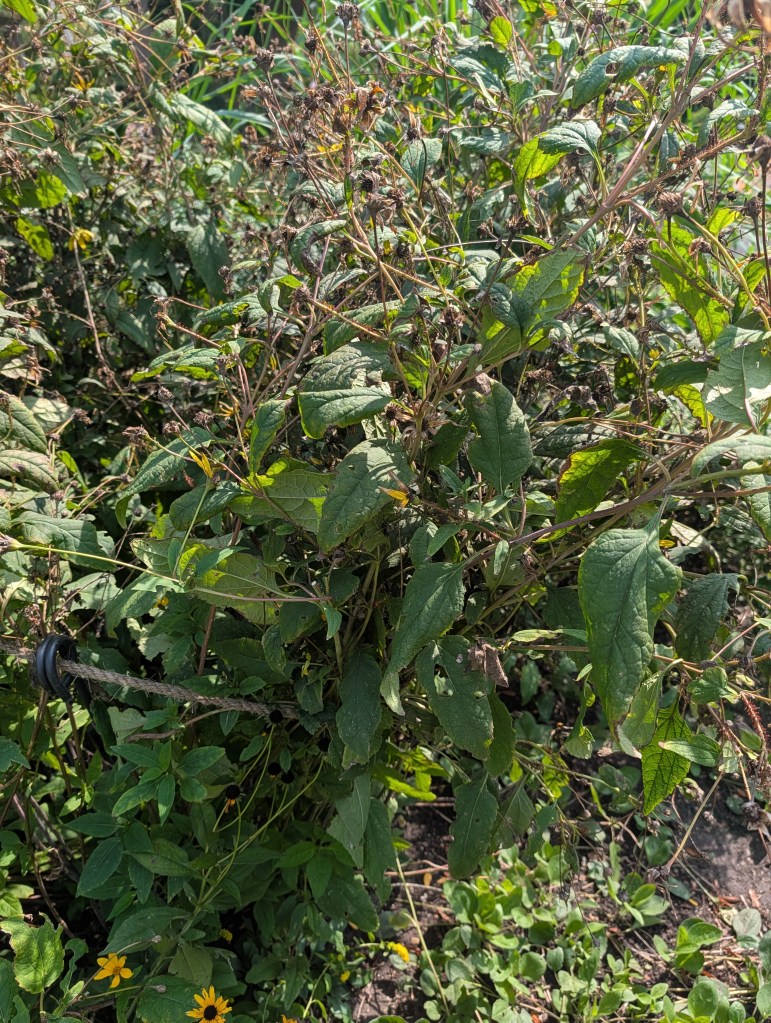
Sometimes the garden can be pulled back from the brink. A few hours of clearing, pruning, watering, and gentle encouragement can revive more plants than you expect. The Rage Garden has a stubborn will to live, and many crops will surprise you with their ability to bounce back once they feel your hands in the soil again. There are days when a little effort restores order, and you walk away feeling victorious, proud that you reclaimed your green kingdom from chaos.
Other times, it is not as bad as it looks. The damage might be minimal, hidden beneath the dramatic tangle of weeds and overgrowth. A few careful snips, a bit of water, and a moment of sunlight can reveal plants that were simply waiting for you to return. Starting small helps. Begin with one bed, one corner, one cluster of plants. Work slowly and let the garden show you what still has strength. Chaos often exaggerates itself, and what appears ruined may only be messy.
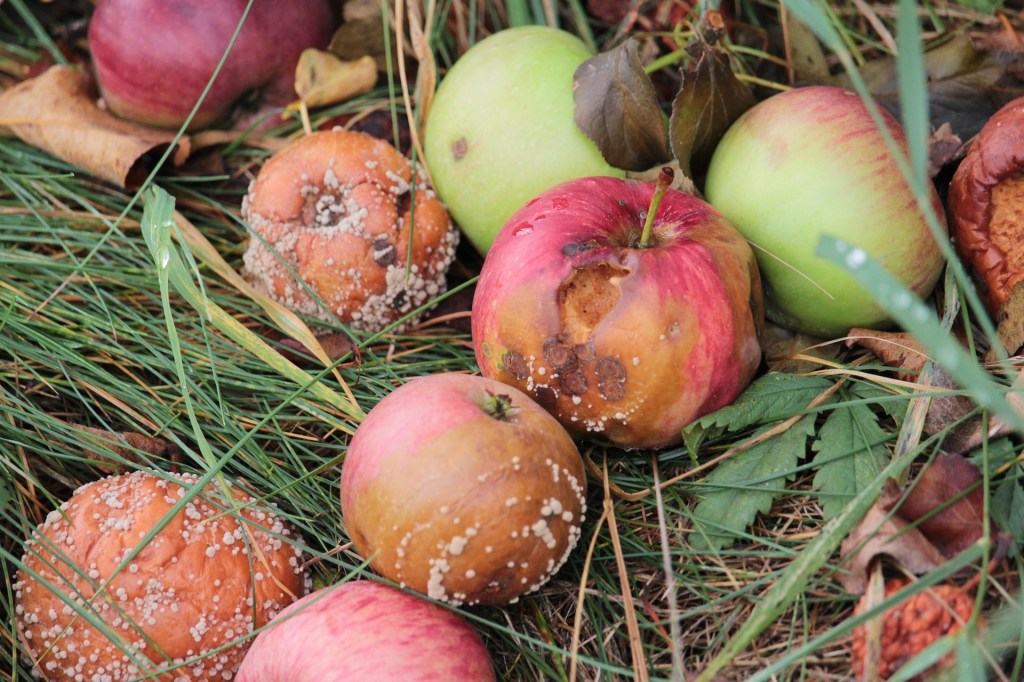
But there are also seasons when the garden has truly gone too far. Sometimes the weeds have won the territory war. Sometimes the pests have taken over with the confidence of creatures who believe the garden now belongs to them. Sometimes the plants you lovingly started in spring are simply too stressed, too scorched, too chewed, or too exhausted to recover. This is where the tough decisions come in. You must decide whether a struggling plant is worth saving or whether it is kinder to let it go. Nature is an opportunist and always finds a way, even if that way is through your garden. Sometimes the strongest choice is to clear space so the soil can breathe again.
Making these decisions now will make overwintering easier later. A garden that has been gently reclaimed, even in small sections, is far simpler to put to bed when autumn arrives. You will spend less time fighting chaos and more time enjoying the delights of fall. Cooler air, warm drinks, turning leaves, and quiet evenings become easier to savor when your garden is no longer demanding emergency triage.
Late Garden Hope
Before you walk away completely, consider a small act of reclamation. Fall gardening can be a gentle return, a way to plant hardy crops that do not demand perfection. Lettuce, spinach, radishes, kale, sugar peas and turnips rise quickly in cooler weather. They forgive neglect. They thrive in simplicity. Planting a few fall crops can give you a sense of control again, a reminder that the garden is still yours even after chaos. A small fall harvest can be enough to restore your confidence and reconnect you with the soil.
Cool‑season plants are kinder than summer crops. Lettuce grows fast and prefers the chill, especially if you keep the soil lightly moist. Spinach loves short days and cool nights, and it will bolt far less in autumn than in spring. Radishes are the easiest of all, racing from seed to harvest in just a few weeks, even when the rest of the garden feels tired. Kale becomes sweeter after a frost, its leaves deepening in flavor as temperatures drop. Turnips thrive in cool soil and reward you with both tender roots and edible greens.
Cold‑hardy crops offer even more hope. Some varieties of kale, spinach, and Asian greens can survive light frosts without complaint. Mache, claytonia, and winter lettuces can endure cold nights and still grow slowly through autumn. These plants do not demand perfection. They simply ask for a bit of soil, a bit of water, and the patience to let them rise in their own time.
Fall gardening is not about rebuilding the entire kingdom. It is about planting small pockets of possibility. It is about giving yourself something gentle to tend while the rest of the garden settles into its end‑of‑season quiet. These cool‑season crops grow quickly, require little fuss, and reward you with fresh food when you thought the season was over. They remind you that the garden still listens, still responds, still welcomes you back even after chaos.
And when winter finally arrives, these small patches of fall growth make the transition easier. You will have already cleared a few beds, already tended a few corners, already reconnected with the soil. Overwintering becomes simpler. You spend less time wrestling with tangled remains and more time enjoying autumn delights. Warm drinks, crisp air, turning leaves, and quiet evenings feel richer when your garden is no longer demanding emergency triage.
Fall gardening is hope made visible. It is the gentle promise that even after a season of chaos, something new can still grow.
Let the Garden Rest
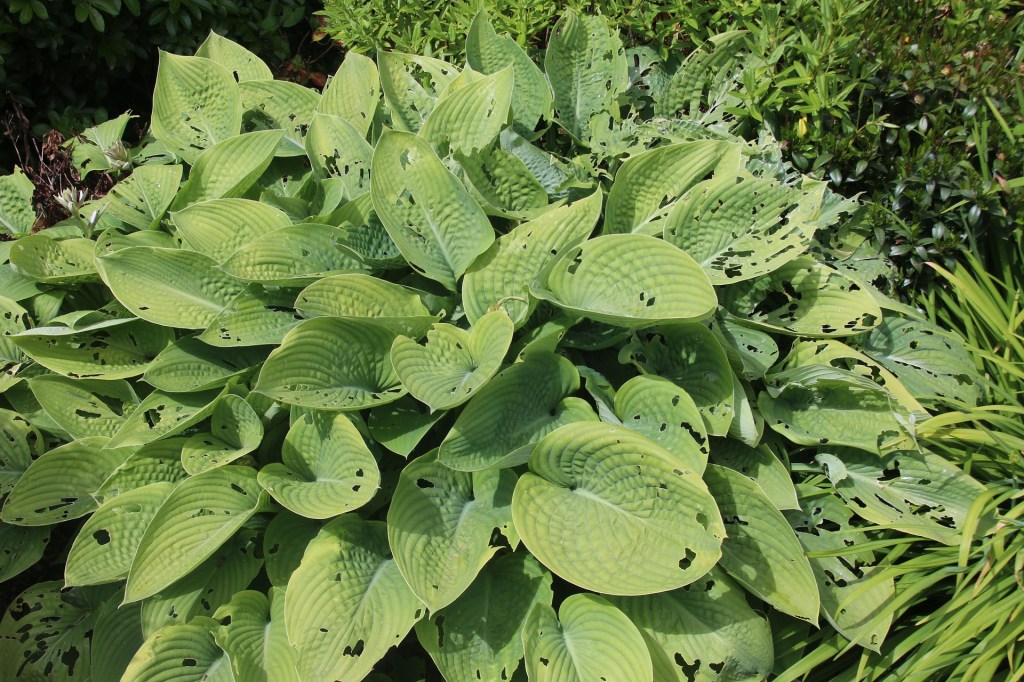
And if even that feels like too much, then let the garden rest. Put it to bed for the year. There is no urgency now. Move through the beds slowly, letting your hands wander without pressure or expectation. Pull the dead plants and let them go. They have already told their story. They have already given what they could. Clearing them away is not an act of defeat but an act of release.
Add compost, leaves, and organic matter to the soil. Let the earth breathe again after months of heat, storms, pests, and your own exhaustion. The soil remembers everything that happened this season, and it needs time to recover just as you do. When you feed it, you are feeding yourself. When you give it space, you are giving yourself permission to pause.
Let the worms work. Let the microbes rebuild. Let the garden heal while you heal too. A resting garden is not a neglected garden. It is a garden in transition, quietly preparing for whatever comes next. There is dignity in ending a season with care instead of guilt. There is strength in choosing rest over relentless effort. There is wisdom in knowing when to stop.
Recuperation is part of the work. Rest is part of the cycle. You deserve that pause. You deserve a season where you are not fighting weeds or chasing pests or trying to salvage stressed plants. You deserve evenings where you sit outside and enjoy the cool air without feeling like you should be doing something. You deserve autumn delights, warm drinks, turning leaves, and quiet moments that are not interrupted by garden demands.
Putting the garden to bed is not giving up. It is preparing the soil for next year’s hope. It is creating a foundation that will make spring easier, gentler, and more joyful. When you return, the earth will be ready. And so will you.
You do not have to grow every year. You do not have to fight every battle. You do not have to be the perfect gardener. The Rage Garden is a place where you learn, adapt, and grow alongside your plants. It is a place where you become more alive, even in the chaos. And maybe, sometime in January, when the seed catalogs arrive in your inbox with their glossy promises and impossible dreams, you will feel that familiar spark again. You will start imagining your green kingdom rising anew. You will picture vines climbing, herbs whispering, cucumbers curling, and tomatoes blushing in the sun. You will remember how deeply alive you felt in the garden, even when it got away from you.
The Rage Garden gets away from everyone eventually. What matters is that you come back when you are ready. The soil will wait. The garden will forgive. And next season, you will grow again.

Discover more from Anything Agriculture
Subscribe to get the latest posts sent to your email.
