Welcome, fellow agricultural enthusiasts! 🌾
Imagine a farming practice that not only improves soil health but also boosts pasture productivity, enhances animal welfare, and reduces environmental impact. Sounds like a dream, right? Well, it’s time to turn that dream into reality with rotational grazing!
In Part One of our exploration, you’ll discover the fundamentals of rotational grazing, a time-tested technique that has transformed farms across the globe. By dividing your pasture into smaller paddocks and allowing livestock to graze each section in rotation, you can optimize forage growth, prevent overgrazing, and create a harmonious balance between animals and the land they depend on.
Find those articles here: How to Start Rotational Grazing on Your Farm
And Forage Species for Your Rotational Grazing Operations Part 1
Continuing from our last Forage Friday this is part 2. I wanted to share more information about common forages found in the Midwest. While there are many options, these are the ones you’re most likely to find locally. I hope this information proves useful. Rotational grazing is all about discovering what works best for your operation, and the more information you have, the better your decisions can be. I hope you find this helpful. This is an overview of common forages. In the coming months I hope to explore some of these species in more detail.
Kentucky Bluegrass
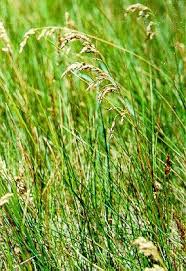
- Quality: Seen as the gold standard for grazing animals due to its excellent quality.
- Yield: Doesn’t yield much forage.
- Establishment: Can be hard to establish and doesn’t handle drought conditions well.
- Soil: Thrives in 5.8-6.5 pH soils but doesn’t do well in poorly drained soils.
Orchardgrass
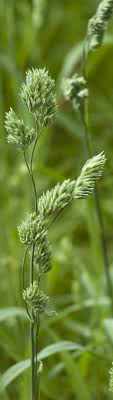
- Quality: Good forage.
- Varieties: Use late-maturing varieties if adding legumes to prevent competition.
- Soil: Can handle a wide variety of soil pH (5.5-8.2).
- Disease Resistance: Some varieties have excellent disease resistance.
Reed Canary Grass
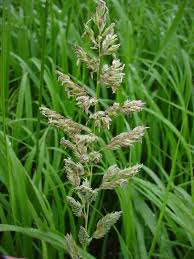
- Quality: High yield and very palatable to livestock.
- Adaptation: Long-lived perennial adapted to wet areas and poorly drained soils.
- Caution: Should not be seeded in wetland areas as it overtakes natural habitats quickly. Use low-alkaloid varieties to avoid issues like “staggers” or sudden death in ruminants.
Ryegrass Annual or Perennial

- Quality: Excellent forage quality.
- Establishment: Quick to establish and very drought tolerant.
- Varieties: Several types, including tall and compact. Annual ryegrass is an option for annual forage.
- Soil: Tolerates soils with pH 5.6-6.3 and somewhat poorly drained soils. Needs a rust-resistant variety to maintain stand health.
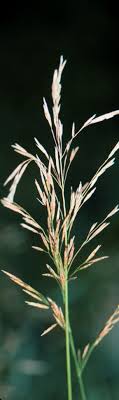
Smooth Bromegrass
- Quality: Highly palatable to cattle and sheep when young.
- Recovery: Takes time to recover after grazing.
- Compatibility: Works well with legumes in pasture mixes.
- Soil: Large root system, great for erosion control, and very drought tolerant.
Tall Fescue

- Prevalence: Common in Indiana.
- Quality: Long-lived perennial, grows 2-4 feet high, and is drought tolerant.
- Soil: Handles more acidic and poorly drained soils, and is tolerant of overgrazing.
- Caution: Older fields may have endophyte-infected varieties, which can lead to low animal performance and reproductive complications in horses. Choose low or no endophyte varieties.
Timothy
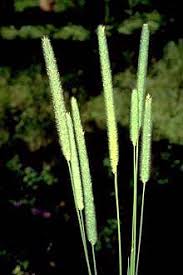
- Quality: Late-maturing cool-season grass, very palatable to horses and cattle.
- Longevity: Winter hardy but short-lived (2-4 years).
- Soil: Not drought tolerant due to shallow root system. Doesn’t do well with close grazing or with alfalfa.
Warm Season Grasses
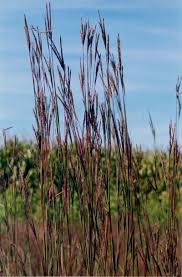
Big Bluestem
- Quality: Very good palatability grows during July and August when cool-season forages are dormant.
- Caution: Not good for lactating dairy. Suited to rotational grazing systems. Slow to establish and shouldn’t be allowed to reach maturity as quality decreases.
Eastern Gamagrass
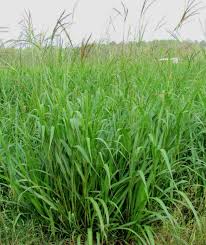
- Quality: Highly palatable and productive, adapted to wet habitats.
- Establishment: Poor seed production and requires stratification (cold period) for germination. Can be planted with pre-stratified seeds or untreated seeds in winter.
Indiangrass

- Quality: Highly palatable to livestock, adapted to deep moist soils, and drought tolerant.
- Establishment: Hard to establish due to light, fluffy seeds. Great for rotational grazing but can’t tolerate close continuous grazing.
Switchgrass
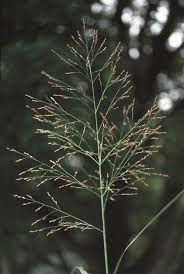
- Quality: Matures quicker than other warm-season grasses, deep-rooted, and drought tolerant.
- Soil: Tolerates wet sites and poorly drained soils. Slow to establish and can’t tolerate close grazing.
Legumes
Alfalfa
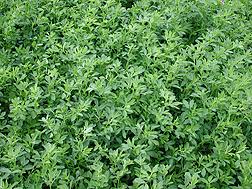
- Quality: High protein content, helps repair damaged soils, and great for rotational grazing.
- Caution: Pure stands can cause bloat in animals. Popular forage with extensive research available.
Alsike Clover
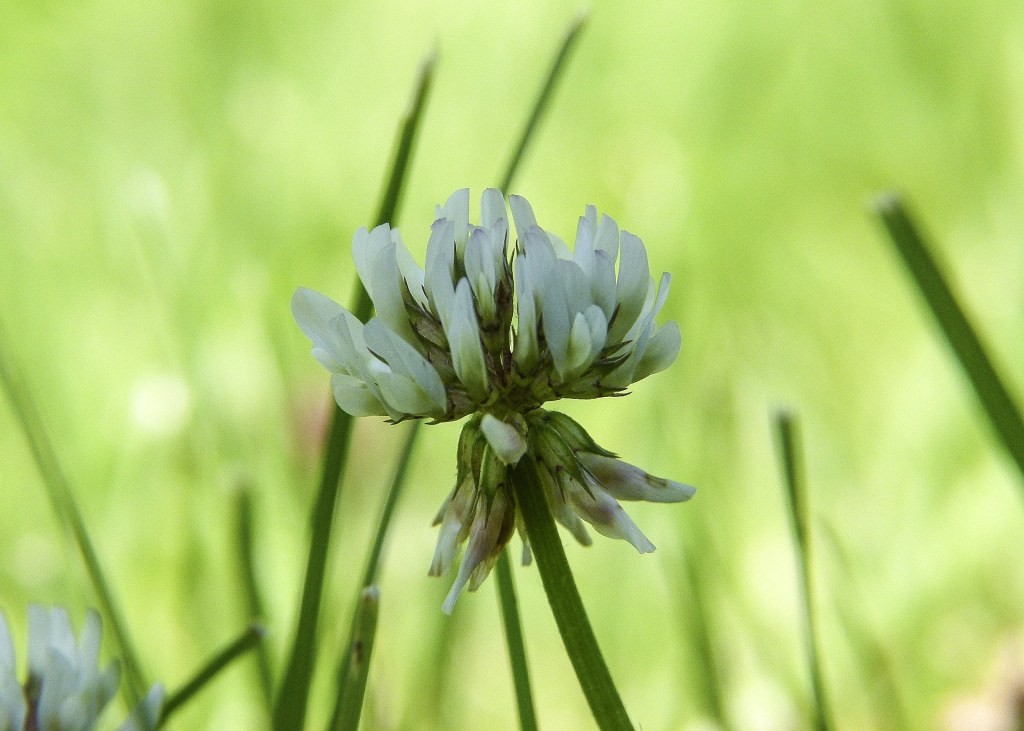
- Quality: Suitable for wet and acidic soils.
- Caution: Toxic to horses and doesn’t do well in doughty sites. Can be seeded with grasses or overseeded in pastures.
Birdsfoot Trefoil
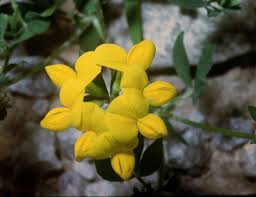
- Quality: Highly digestible and doesn’t cause bloat. Adaptable to many environments.
- Soil: Handles somewhat poorly drained soils and more acidic soils (pH 6.0-6.8). Long-lived and good for frequent grazing if not overgrazed.
Red Clover
- Quality: Great for pasture and soil improvement. Biennial and relatively short-lived.
- Soil: Withstands more shade than most legumes and is very palatable to livestock. Needs to build up reserves for winter and can be frost-seeded in January or February.
Native Grasses
- Options: Big Bluestem, Indiangrass, Switchgrass, Little Bluestem, and Gamagrass.
- Grazing: Best grazed from June to August, allowing cool-season grasses to rest. Start small and avoid grazing the same year they are planted.
- Seeding: Requires special equipment for seeding. Consider adding legumes and forbs to improve stand quality.
Weeds in Pastures
- Problem: Weeds can be noxious, aggressive, and indicate soil issues. They rob nutrition from pastures.
- Solution: Implement an aggressive weed elimination program to avoid issues with livestock.
.
Thank you for reading! If you want more information and updates, please subscribe to my newsletter. Get the latest blog posts and new offers right in your email. It’s free to subscribe, and you’ll receive loads of information at no cost.
Don’t forget to check out Anything Agriculture on social media! Follow us on YouTube, Facebook, Instagram, and Pinterest for more great content. Like and subscribe to stay connected!
Ready to take your homesteading journey to the next level? Book an appointment with me today! With decades of experience, I provide personalized advice to solve any homesteading challenge. Whether you’re a newbie or a seasoned homesteader, I offer expert guidance to make your homestead thrive. Don’t miss out—schedule a chat and unlock the full potential of your homestead with Anything Agriculture. Let’s turn your dreams into reality!


Discover more from Anything Agriculture
Subscribe to get the latest posts sent to your email.

One thought on “Forage Species for your rotational grazing operations Part 2”